The Bedtime Story: Why This Ritual Changes Everything for Your Child
It's 7:30 pm. The day has been long, the dishes are waiting, and your child arrives with a book under their arm and that look you just can't say no to. Ten minutes later, curled up against you, they're listening. This moment seems ordinary. It's probably one of the most powerful of their day, and yours.
- Daily shared reading massively enriches vocabulary: a child who is read to every day hears hundreds of thousands more words before starting school.
- A regular bedtime ritual improves falling asleep and sleep quality.
- A child who recognizes themselves in a story identifies with the hero: a powerful lever for self-confidence.
What the bedtime story builds, quietly
Language, first
Children's books contain a much richer vocabulary than everyday conversation. "Majestic," "glimmer," "courageous": words a child rarely hears at the dinner table, but often in stories. Researchers estimate that a child who is read a book every day hears, by the time they start school, over a million more words than a child who is never read to. That head start shows up later in reading and writing.
Sleep, next
Pediatricians repeat it often: a predictable bedtime ritual helps children fall asleep faster and sleep better. The bedtime story acts as a buffer between the day's excitement and the night. Soft light, a calm voice, the same armchair: the child's brain learns that the story signals sleep, and prepares for it.
The bond, above all
Fifteen minutes of total attention, no screens, no interruptions. For many families, the bedtime story is the only moment of the day when parent and child are entirely with each other. Adult memories confirm it: we forget the toys, we never forget the voice of our mother or father reading to us.
The spark: when the child becomes the hero
Every parent knows this phenomenon: some books get requested every night for months. What's special about them? Almost always, the child recognizes themselves in it. The character looks like them, lives what they live, or shares their name.
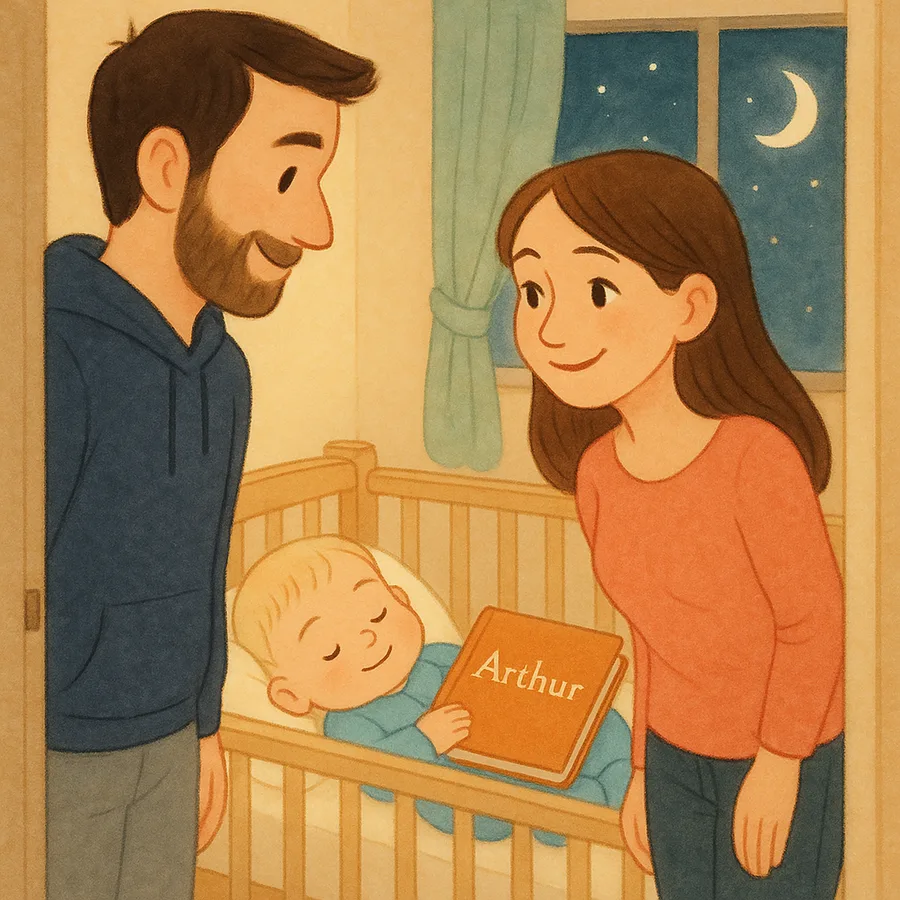
That's exactly the mechanism behind personalized books: identification. When the story says "Emma took a deep breath and found her courage," and Emma, age 5, hears her own name, something happens. She's no longer just listening to a story, she sees herself being brave. Child psychologists have long used this mechanism; stories let children work through their fears (the dark, starting school, a new little sister) by living them by proxy, safe in a parent's arms.
Getting your ritual right: tips by age
- 0 to 2 years: short picture books, a sing-song voice, naming what you see. Five minutes is enough. Consistency beats everything.
- 2 to 4 years: simple stories with repetition. Let the child turn the pages and complete the sentences they know by heart.
- 4 to 6 years: room for real adventures. Ask questions: "What would you have done?" It's the perfect age for a book where they're the hero.
- 6 to 10 years: alternate between the parent reading and the child reading. Chapter books create the pleasure of "we'll find out tomorrow night."
Three traps to avoid
- Turning it into a negotiation. The story is neither a reward nor a punishment. It happens every night, full stop. Its consistency is what makes it precious.
- Aiming for performance. No need to finish the book or vary it every night. Rereading the same story ten times is excellent for language development.
- Replacing it with a screen. Audio stories and cartoons have their place, but they replace neither the parent's voice nor the conversation around the pages.
Give them the story they'll ask for every night
A watercolor illustrated book where your child is the hero: their name, their face, their family, their world. Created to order in French-speaking Switzerland, preview before printing.
✨ Create their book from CHF 48.–Frequently asked questions
At what age should you start the bedtime story?
From birth. Before age 1, the baby doesn't understand the story, but they soak up the voice, the rhythm and the closeness. It's the ritual itself, calm and regular, that lays the foundations for language and sleep.
How long should the bedtime story last?
10 to 20 minutes is enough. Consistency matters more than length: a short story every night beats one long session a week.
My child always wants the same book, is that a problem?
No, it's actually excellent. Repetition is reassuring, strengthens vocabulary, and lets the child anticipate the story. Children especially ask for stories where they recognize themselves, like personalized books where they are the hero.
See also: Personalized book guide · Create a custom book · Birthday gift ideas